I spend most of my day in Claude Code, and yesterday a new option worth trying showed up. Sakana AI — a research lab in Tokyo — released something called Fugu on June 22, and the pitch is unusual: instead of being one AI model, it's a switchboard that takes your request and quietly hands it off to whichever top-tier model is best for the job, then stitches the answer back together. You talk to one thing; behind the curtain it's working a whole roster. It only launched the day before I wrote this, so consider this an early look rather than a settled verdict. I wired it into Claude Code to see what the experience was actually like.
This post covers what Fugu is, how I connected it, and the one thing that caught me off guard — a usage budget that vanished faster than I've ever seen.
What Fugu actually is
Most AI tools are a single model: you ask, it answers. Fugu is a layer on top of that. Sakana describes it as a multi-agent system — meaning it coordinates several different AI models — dressed up to behave like a single one. The clever part is that the orchestration never reaches you. You send one request to one address, and Fugu decides whether to answer it directly or assemble a small team of specialist models to handle the harder parts.
It comes in two flavours. Plain Fugu is the everyday one, tuned to be quick. Fugu Ultra is the heavyweight — it pulls in a deeper bench of models for hard, multi-step problems, and it trades speed for quality. Both live behind the same connection, so switching between them is a one-word change.
Sakana's own reason for building this is worth knowing: a few of the most powerful AI models recently became unavailable in some regions due to government export rules. Fugu's selling point is that it routes around any single provider — if one becomes unavailable, it just uses the others.
Getting it into Claude Code
A quick note on terms. Claude Code is the tool I use for coding — it runs in the terminal, the text-based window where you type commands instead of clicking buttons. CC Switch is a small companion app that lets me flip Claude Code between different AI providers from a menu, without editing config files by hand.
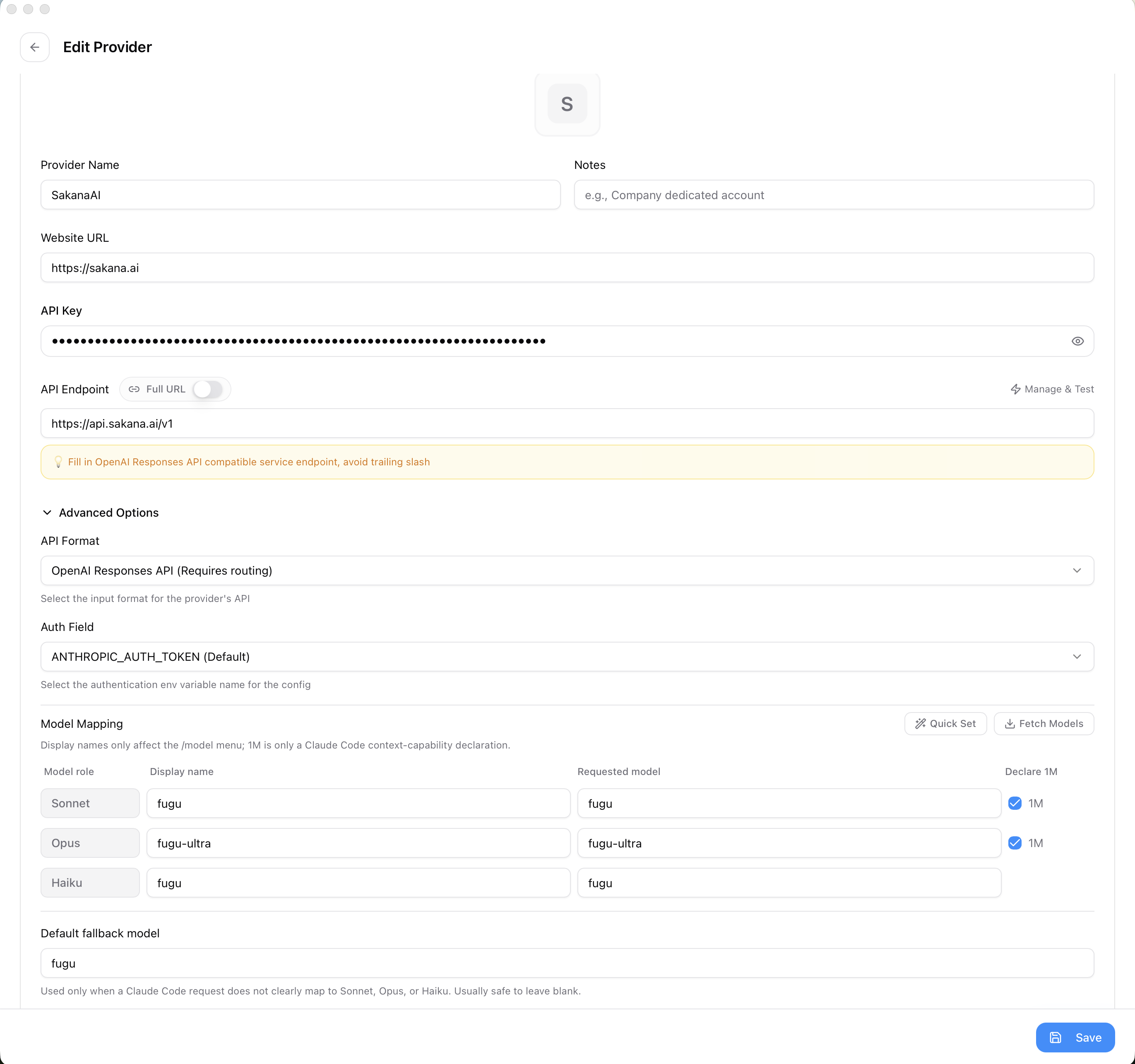
Sakana's official instructions wire Fugu into a different coding tool. I wanted it inside Claude Code, so I used CC Switch to add Sakana as a provider. The pieces you need are the same regardless: the address of the service (Sakana's API endpoint), a key (a long secret password that proves the requests are yours), and a note telling the tool that Sakana speaks a slightly different dialect and needs translating — what the screen labels "routing."
Once Sakana was added, I mapped Claude Code's model names onto Fugu's — the everyday model to fugu, the heavyweight to fugu-ultra — and it was ready.
The part that surprised me
Here's what I didn't expect. I normally run Claude Code with two of my own tweaks — I call them Caveman and Ponytail — that trim how much the tool sends back and forth. Less back-and-forth means lower cost, because these tools bill by volume of text. For this test I switched both of them off, to see Fugu in its raw state.
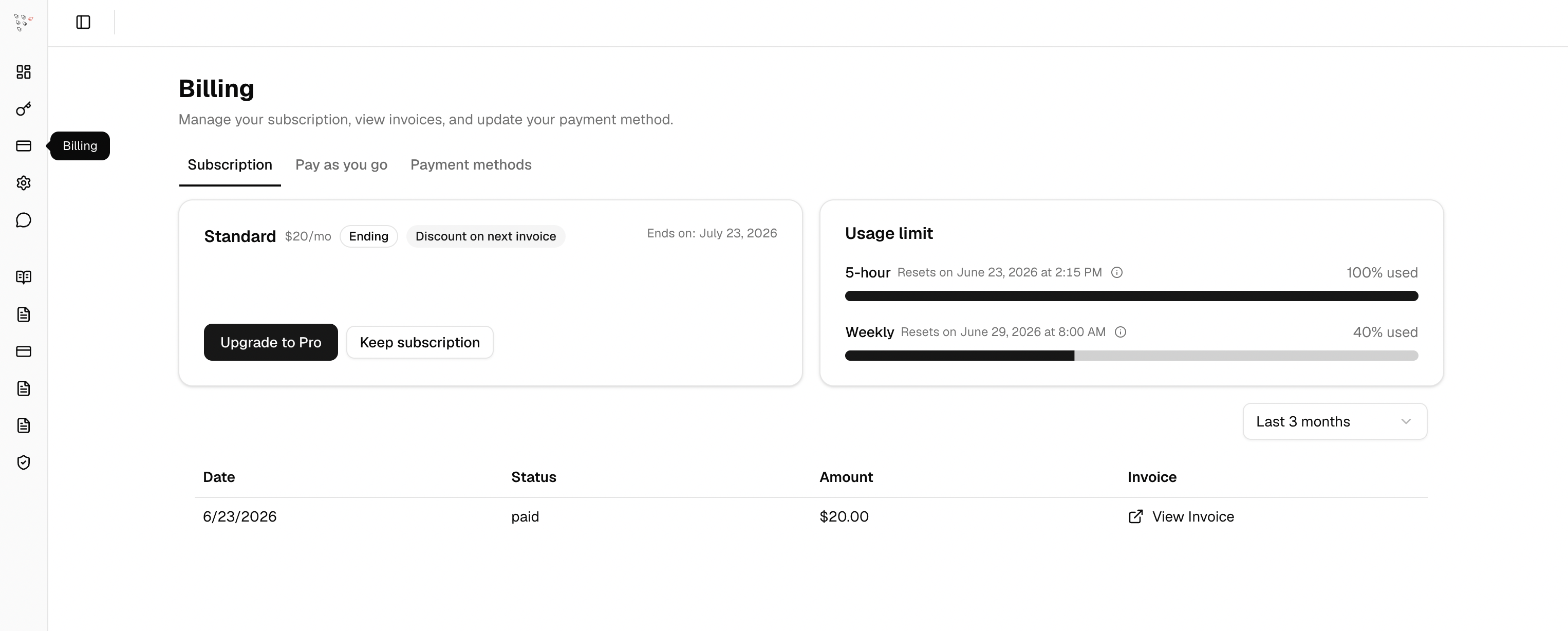
The result: on Fugu Ultra, I burned through the entire five-hour usage budget in about 20 minutes.
That's not a complaint about Fugu so much as a lesson. Ultra reaches for more models and does more work under the hood, and all of that hidden work counts toward what you're charged — not just the final answer you see. Without my usual trimming in place, the meter ran hot, fast. If you try Ultra, go in knowing the budget is real and it moves quickly.
Verdict
Fugu is a genuinely interesting idea, and getting it into Claude Code took minutes once I had a key. I'd reach for plain Fugu for everyday work and treat Ultra as the option you pull out deliberately, not the one you leave running. And whatever you do — keep your token-trimming tools switched on. I learned that one the expensive way.
Next up: putting Caveman and Ponytail back on and measuring exactly how much they save against Fugu.